Showing posts with label Kaizen. Show all posts

Friday, March 6, 2015

Laboratory logistics and process flow


Minimize Motion and Transport Muda in the Lab


Continuous operational flow with streamlined processes is the ideal for any analytical lab. This can be achieved by organising the workspace to reduce time wasted by motion and transport. Creating a motion map or a spaghetti diagram can help understand process flow and identify areas of "traffic", unnecessary journeys, obstacles and bottlenecks - see the map I generated for a PCR process below. Draw a basic floor plan of the facility and map every motion involved in a process - record the amount of time spent in motion and gauge distances. Review the map and data and see how process motion can be improved. Can the workspace be reorganised to minimize the amount of travel? Can instruments be relocated? Can consumables or reagents be stored in more accessible area? Many facilities have shared equipment rooms - can the number of visitations be reduced. Consider batch size also, is it better to process smaller amounts or take several journeys to transport a larger batch? Review transportation methods - if there's a trolley available use it! Motion and transport are huge wastes in laboratories and they also contribute to waiting. Not only is time wasted physically, but sample deterioration can also occur, not to mention opportunities for bioburden to accumulate. So when streamlining an analytical process consider levelling sample loads, ensure that the queuing system is optimized for sample storage and enhance logistics by making equipments an instruments readily accessible to minimize journeys and delays. 

Spagetthi Diagram - Motion Map
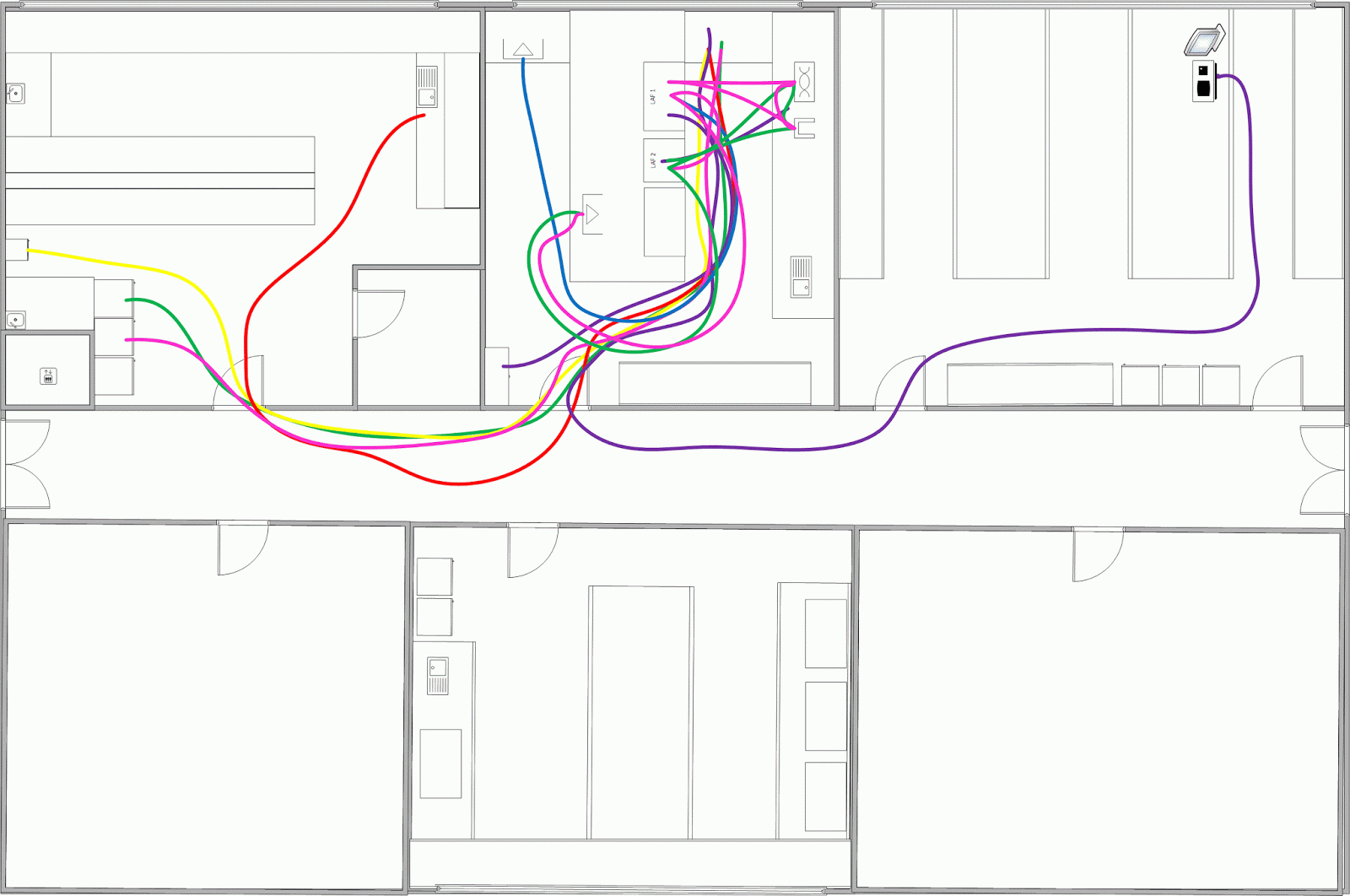

Spaghetti diagram for my qPCR assay.....clearly we need to rearrange a few things!


Time, money and energy is lost in motion!


An optimized process flow with reduced transport and movements can help minimize errors and reduces fatigue for the lab staff. Continuous flow, creates a more streamlined workload and increases productivity. Mapping a process is an essential step of value stream mapping and is very useful in identifying waste, delays and bottlenecks: 

  • Unnecessary motion of people during process sampling
  • Unnecessary transport of personnel, product, sample, reagents, information
  • Inconvenient location of equipment, instruments and materials


Many companies will have a value stream map (VSM) for a product. However it is worth creating a specific VSM for the QC analysis process of that product to help improve laboratory efficiencies. Time is also lost in the transfer of information and data. Processes should be optimized to ensure there is an efficient system in place for sample collection, data processing and delivering data results. An efficient LIMS system will dramatically improve data transfer and reduce waiting. The Kanban tool can be used in conjunction to help visualise the process, particularly where quesues and volatile workloads are involved (refer to Kanban post).


Spaghetti diagram of current workflow and new implemented workflow


Value Stream Map


Creating a current state value stream map is an efficient tool to understand the logistical flow of a process, provide detail on the value of each step and detect non value added elelments with opportunities for Kaizen events - continuous improvement. A VSM illustrates the flow of information, data, processes, inputs outputs and integrates metrics to evaluate value in terms of time and cost. A current state VSM with Kaizen events can be used to project future efficiencies by generating a projected, future state VSM. The illustration below outlines the flow of infomation, materials and lead time. Each individual step in the process includes metrics relating to cycle time and delays. 


Current state VSM can provide details relating to:


First in First Out Processing
  • Queues (backlog) of work items. Queues are organised based on the number of items waiting to be processed. 
  • Queues can be prioritized in several ways, i.e. First-In-First-Out (FIFO) 
  • Wait time - how long a sample is in a queue
  • Work time how long it takes to process/analyse a sample 
  • Identifying bottlenecks and causes of delay 
  • Identify areas of unproductive work, resource imbalances 
  • Areas of automation or manual processing

Current VSM depicting the process flow of a sample from delivery, processing to release of results, with intermittent Kaizen events.


Tuesday, March 3, 2015

Eliminate Waste


Muda is the Japanese word meaning futility, idleness, waste.

Anything that doesn't add value to a process is wasteful.
Identifying waste is critical to Lean practice - the 3M wastes include Muda, Mura, Muri 
                u


    Muda


    Muda (waste) is any activity that doesn't add value to a process or product. The 8 wastes in Lean are:


    • Transportation - movement of material
    • Inventory - use of space and funds to hold inventories of material
    • Motion - movement of people
    • Waiting - queuing or scheduled delays
    • Overproduction - producing more than necessary – in lab terms this could be media, buffer or other reagents
    • Over processing: excess work or checks in process
    • Defects: work (samples) that needs correcting or repeating
    • Skills - unused talent or potential


    Mura

    Mura (unevenness) is the waste associated with variations in work loads - a common occurrence in labs! Samples delivered and analysed in large batches impedes continuous flow. Lab workloads are volatile and are characterised by peaks and troughs. Imbalanced workloads negatively impact productivity and reduce lead time performance. Balancing the workload is an essential aspect of lean implementation to create a continuous flow rate. This can be achieved by levelling incoming samples by implementing a queue system at the start of the process with gradual release of samples to the lab. In biopharma, the sample flow rate is determined by production - lean manufacturing is necessary to alleviate Mura however it is not always possible due to batch processing is and queueing is dependent on sample stability.


    The effect of unevenness and instability on lab productivity


    Muri

    Muri (overburden) is the overloading of people or equipment. Muri is often directly caused by unevenness (Mura) when lab analysts are overloaded by peaks in the workload. Muri can be alleviated by effective resource scheduling levelling the workload to meets demands.


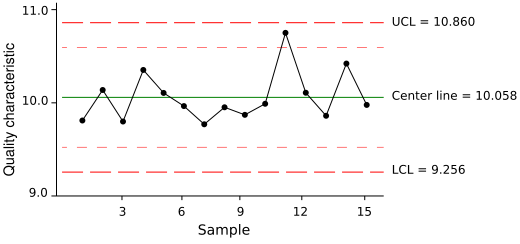
    Mura, Muda and Muri operate in synchrony. Eliminating one also eliminates the others. Identifying all aspects of waste is critical to lean implementation. Value Stream Mapping (VSM) is a powerful tool for process improvement. Similarly, statistical process control charts can help evaluate process efficiencies and identify 'special causes' or anomalies within a process. SPC charts can help assess variations within a process. It is most applicable to upstream and downstream bioprocessing, however SPC can also be effective in evaluating throughput efficieincies in laboratory sampling and may be valuable in detecting variation in analytical processes. Check out the case study Statistical Process Control (SPC) and Catalent.


    Process Control Chart


    SPC chart outlining the upper (UCL) and lower (LCL) control limits. Generally time or sample number is on the X axis and analytical or process parameter on the Y axis 


    Monday, March 2, 2015

    Go To Gemba!


    Observe, Engage, Improve


    Gemba is a Japanese word which means “at the site”. In Lean, Gemba means observing a process in action. The first step in the Lean process is go to Gemba - go and see!


    Identifying muda or waste in the lab is key to successful implementation of lean. In order to identify wastes and defects it is necessary to go to Gemba and observe, engage in the process. Gemba is essentially a waste walk or audit to get an understanding of a situation, process, purpose and people. Improvement can only occur if the situation is adequately understood. There is no point assessing a process from the desk, muda isn’t evident from remote assessment. During Gemba consider SIPOC: Supply Input Process, Output, Control.


    Tuesday, February 24, 2015

    Lean manufacturing, Lean thinking, Lean culture...

    What is Lean?


    Lean is typically associated with waste minimization, continuous improvement and respect for people. All of these measures contribute to more productive and efficient processes. Lean manufacturing is modelled on the Toyota Production System (TPS).


    A leaner laboratory can make significant improvement in routine testing and analyses. Lean is already widely adopted to the manufacturing industry where many processes have benefited from continuous improvement projects. The laboratory is no exception! Whether it’s a clinical, diagnostic, analytical, quality control or microbiology lab, a lean lab will result in: 


    • Enhanced productivity
    • Reduced waste (muda)
    • Increased throughput
    • Faster turnaround times (TAT) 
    • Significant cost reductions!
    • Better employee morale


    5 Lean Principles 


    1. Value: define what is of value to the customer
    2. Value Stream: identify the value stream, eliminate waste
    3. Flow: Create a constant flow
    4. Pull: Produce on demand
    5. Perfection: Continuous improvement


    Continuous Improvement - Kaizen


    By adopting a Lean culture, laboratory processes can be improved significantly. Identifying and eliminating waste can really reduce costs. When the lab and processes are optimized in the Lean Six Sigma way, lab life is made a lot simpler and more productive. The Lean culture has a strong emphasis on respect for people – continuous improvement relies on this attribute. The lean culture values the process owners - i.e. lab technicians, scientists, supervisors etc. and has a policy of empowerment, each individual is responsible and engaged in a team effort to ensure continuous improvement or Kaizen. A lean lab should be an enhanced and more simplified productive environment with the added advantage of boosting morale.


    Principles of Kaizen